

-
2D
-
3D
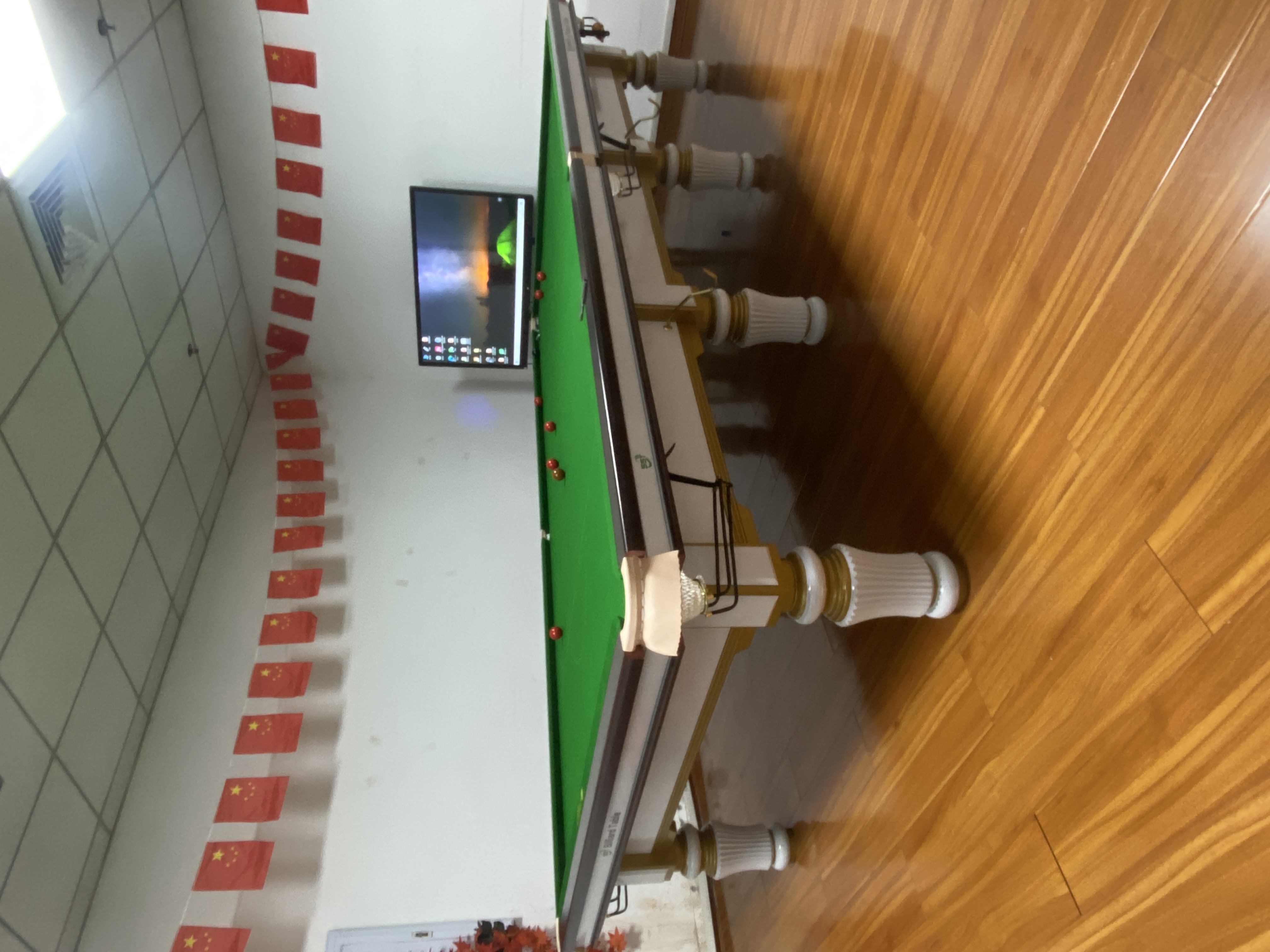
Billiard Table
Description
The Ultimate Guide to the Billiard Table: An In-Depth Description
A billiard table is far more than a simple piece of recreational furniture; it is a precision-engineered instrument, a centerpiece of social interaction, and an artifact rich with history. From the grand halls of English manor houses to the vibrant atmosphere of modern sports bars, the billiard table has remained a symbol of skill, strategy, and sophistication. This comprehensive description delves into the anatomy, types, craftsmanship, and key considerations that define a high-quality billiard table.
I. A Brief Historical Evolution
The billiard table's origins date back to the 15th century in Northern Europe, evolving from outdoor lawn games like croquet that were moved indoors to a table. Early tables featured simple wooden boards with raised edges to prevent balls from falling off. Over centuries, key innovations transformed it into the modern table: the green cloth (imitating grass) was adopted, the flat bed of the table was improved for consistency, leather pockets were added, and, most importantly, the rubber cushion was invented in the 19th century, revolutionizing the game by allowing bank and kick shots. The heart of the modern table—the slate bed—became standard for professional play, ensuring a perfectly flat and immutable playing surface.
II. The Core Anatomy: Deconstructing the Billiard Table
A billiard table is a complex assembly of several critical components, each contributing to its playability, durability, and aesthetics.
1. The Frame and Legs
The foundation of the table is its frame. In quality tables, this is constructed from solid, kiln-dried hardwoods such as oak, maple, or mahogany. This process prevents warping and ensures long-term structural integrity. The frame must be incredibly robust to support the immense weight of the slate bed, which can exceed 450 kg (1000 lbs). The legs are either integral to the frame or bolted on with heavy-duty fasteners. Decorative elements like carvings, inlays, and various stains or finishes (e. G., walnut, ebony, natural oak) are applied here, defining the table's style—from traditional and ornate to modern and minimalist.
2. The Bed: The Heart of Play
The bed is the single most important factor in a table's performance.
• Slate Bed: The undisputed gold standard. High-end tables use a single piece of slate, but due to practicality and cost, most are made from three pieces of precision-milled slate, each typically 1 inch (2. 54 cm) thick. This slate is quarried and ground to a perfectly flat surface with a tolerance of within thousandths of an inch. Its primary virtue is that it does not warp, sag, or change with humidity, guaranteeing a true roll forever. The three slabs are aligned on the frame and bolted together, with their seams filled and leveled.
• Non-Slate Alternatives: These include: particleboard (MDF) or synthetic slates. While much lighter and less expensive, they are susceptible to humidity, warping over time, and cannot provide the same consistent ball roll. They are suitable only for casual, non-serious play.
3. The Cloth (Baize)
The cloth covering the bed dramatically affects the speed, grip, and overall playability. Traditionally made from 100% wool, modern high-performance cloth is now predominantly a wool-nylon blend (typically 80%/20%).
• Woolen Cloth (Napless): This is the standard cloth found on most pub and home tables. It has a distinctive fuzzy texture. The balls grip the fabric more, resulting in a slower play speed. It is durable and cost-effective.
• Worsted Cloth (Napped): This is the cloth of choice for professional tournaments and serious players. It is woven differently and then sheared to create a smooth, napped surface without the fuzz. This allows the balls to travel significantly faster and with more predictable consistency. The most famous brand is Simonis.
The color is almost universally green, a tradition from its lawn-game roots, as it is easy on the eyes. However, blue, red, and burgundy are also popular alternatives.
4. The Cushions (Bumpers)
The cushions are the rubber rails mounted on the inside of the table's perimeter. Their quality determines the rebound angle and energy of the balls. They are made from a specific, high-rebound synthetic rubber compound. The profile of the cushion—where the rubber meets the wood—is critically important. The K-55 profile is common for pool tables, while the L-shaped profile is traditional for Snooker. The rubber must be aged and cured properly to maintain its elasticity for decades. Poor-quality rubber will harden over time, leading to a "dead" bounce.
5. The Rails
The rails are the wooden assemblies that house the cushions. They are capped with the Cushion Facings (hardwood strips that the balls contact before the rubber) and the Apron (the vertical surface below the cushions). The rails are bolted directly into the frame and slate, ensuring a solid connection that translates energy efficiently.
6. The Pockets
Pockets are where the balls are captured. There are two main types:
• Drop Pockets: A simple leather or net bag attached to the table. Balls remain in the pocket until retrieved. Common on home tables.
• Ball Return System: A network of underground channels that uses gravity to funnel all pocketed balls to a single return tray at one end of the table. Standard on commercial and many higher-end home tables for convenience.
The pocket openings themselves are defined by leather or plastic Pocket Liners. In Snooker, they are rounded and set slightly away from the rail, while in Pool, they are more angular.
III. Major Types of Billiard Tables
The term "billiard table" is generic; key differences define the games played on them.
1. Pool Table (American-style)
• Size: Typically 7, 8, or 9 feet in length.
• Pockets: Six pockets (four corner, two side) with relatively wide openings.
• Cloth: Usually green, worsted or woolen.
• Balls: Uses 16 balls (1 cue ball, 15 object balls), 2. 25 inches in diameter.
2. Snooker Table
• Size: Larger than pool tables, the full tournament size is 12 feet × 6 feet.
• Pockets: Six pockets, but the openings are significantly narrower and rounded, making them much more challenging.
• Cloth: Almost always green worsted cloth, but the bed is larger.
• Balls: Uses 22 smaller balls (21 object balls, 1 cue ball).
3. Carom Table (Billiard Table)
• Size: Varies, but typically 5 ft x 10 ft or similar.
• Pockets: Has no pockets.
• Cloth: Often a finer, faster-woven cloth.
• Gameplay: Used for games like Three-Cushion Billiards, where the objective is to make the cue ball contact the other balls and the cushions a specified number of times.
IV. The Hallmarks of Quality Craftsmanship
Discerning a superior table involves examining several details:
• Slate Thickness and Seam Leveling: A 1-inch slate is professional grade. The seams between the slate pieces should be invisible to the fingernail and undetectable by a rolling ball.
• Frame Construction: Look for thick, solid wood joined with mortise-and-tenon or double-bolted connections. Avoid thin materials or stapled joints.
• Rail Bolt System: Heavy-duty, self-aligning bolts that secure the rails directly into the slate provide the most solid and responsive feel.
• Precision of Cushion Height: The playing surface of the cushion should be exactly 1-7/16 inches above the bed cloth. Any deviation will cause balls to jump or behave erratically when hitting the rail.
V. Choosing the Right Table: A Practical Guide
1. Space Requirements: The single most important factor. A general rule is to allow for a standard 58-inch cue. This means you need a minimum of 5 feet of clear space on all sides of the table. For a 9-foot table, the room should be at least 19 ft x 14 ft.
2. Intended Use: Is it for family fun, professional practice, or as a decorative piece? This dictates the needed level of quality and durability.
3. Game Preference: Do you primarily play Eight-Ball or Snooker? This decides the type of table.
4. Budget: Prices range from a few hundred dollars for low-end tables to tens of thousands for custom, tournament-grade models. Invest in the best slate table your budget allows, as it is a lifetime investment.
In conclusion, a billiard table is a masterpiece of functional design where physics, artistry, and sport converge. Understanding its intricate components empowers one to appreciate not just the game played upon it, but the remarkable engineering that makes every precise shot possible.
Features
Factory direct sales of customizable pool tables, club specific snooker tables, professional tournament pool sticks, and pool accessories
Product Details
- Unit Size Other_unit_option
- Min. Order Quantity 1 other_unit_option
- Weight 1000kg kg
- Carton Dimensions (L×W×H) 3850mm inch × 2060mm inch × 850mm inch
- Ready to Ship Yes
- Stock Status In Stock
- Sample Available Yes

- 竞跃体育器æ有é™å…¬å¸
- å·åŠ›å°çƒæ¡Œå·¥åŽ‚
- ABBOTTABAD
- 山东çœå¾·å·žå¸‚å®æ´¥åŽ¿é•¿æ±Ÿå¤§è¡—8å·å·åŠ›å°çƒæ¡Œå·¥åŽ‚, ABBOTTABAD, Balochistan
- 18615347367
- https://chuanlifactory.com/
Submit Your Review
Please login to submit your review.