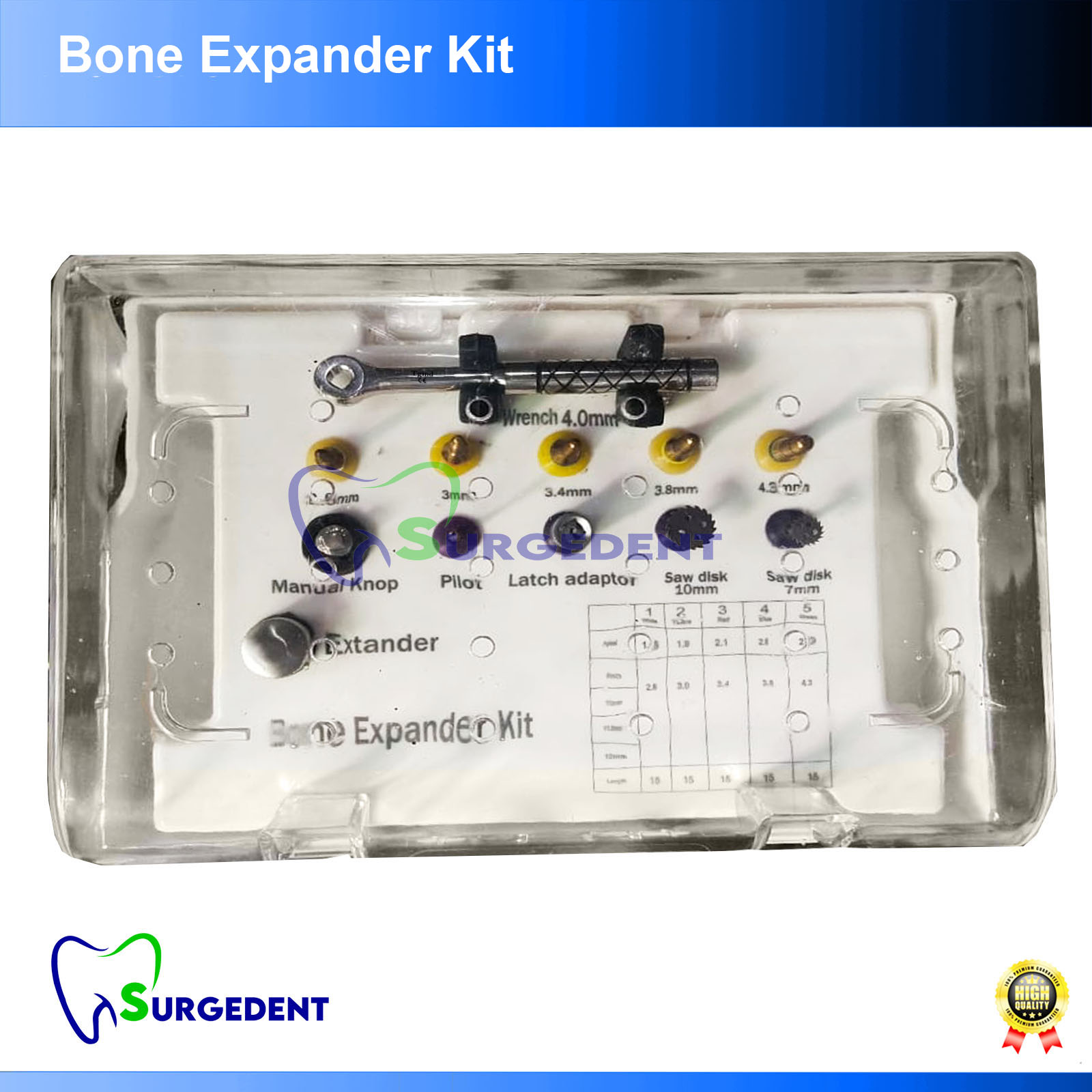
bone expander kit
Description
A bone expander kit is a set of specialized surgical tools used in dental implantology and oral surgery to prepare the bone for implant placement, particularly in cases with narrow alveolar ridges or low-density bone. It offers a less invasive, more controlled alternative to traditional surgical procedures like ridge splitting or bone grafting.
Purpose
The main goal of a bone expander kit is to:
Gradually expand the alveolar ridge to create sufficient width for implant placement.
Improve bone density by compressing the surrounding bone rather than cutting it.
Minimize trauma to the bone and surrounding tissues during implant site preparation.
Applications
Bone expander kits are typically used in:
Narrow Alveolar Ridge Expansion: For patients with insufficient bone width for implants.
Bone Densification: Improves the primary stability of implants by compressing soft bone (e. G., D3 or D4 bone types).
Maxillary Sinus Augmentation: Facilitates implant placement in the posterior maxilla near the sinus floor.
Minimally Invasive Procedures: Eliminates the need for extensive bone grafting in many cases.
Orthodontic and Prosthodontic Preparations: To ensure the foundation for implants is strong and well-formed.
Advantages
Non-Invasive Alternative: Unlike ridge splitting, bone expander kits avoid the risk of fractures and excessive bone loss.
No Bone Loss: Bone expanders compress the bone, preserving its volume and density.
Minimizes Post-Operative Pain: Reduces trauma compared to traditional surgical drills.
Cost-Effective: Limits the need for additional surgeries like grafting or synthetic bone substitutes.
Controlled Precision: The step-by-step expansion allows the surgeon to have full control over the process.
Key Components
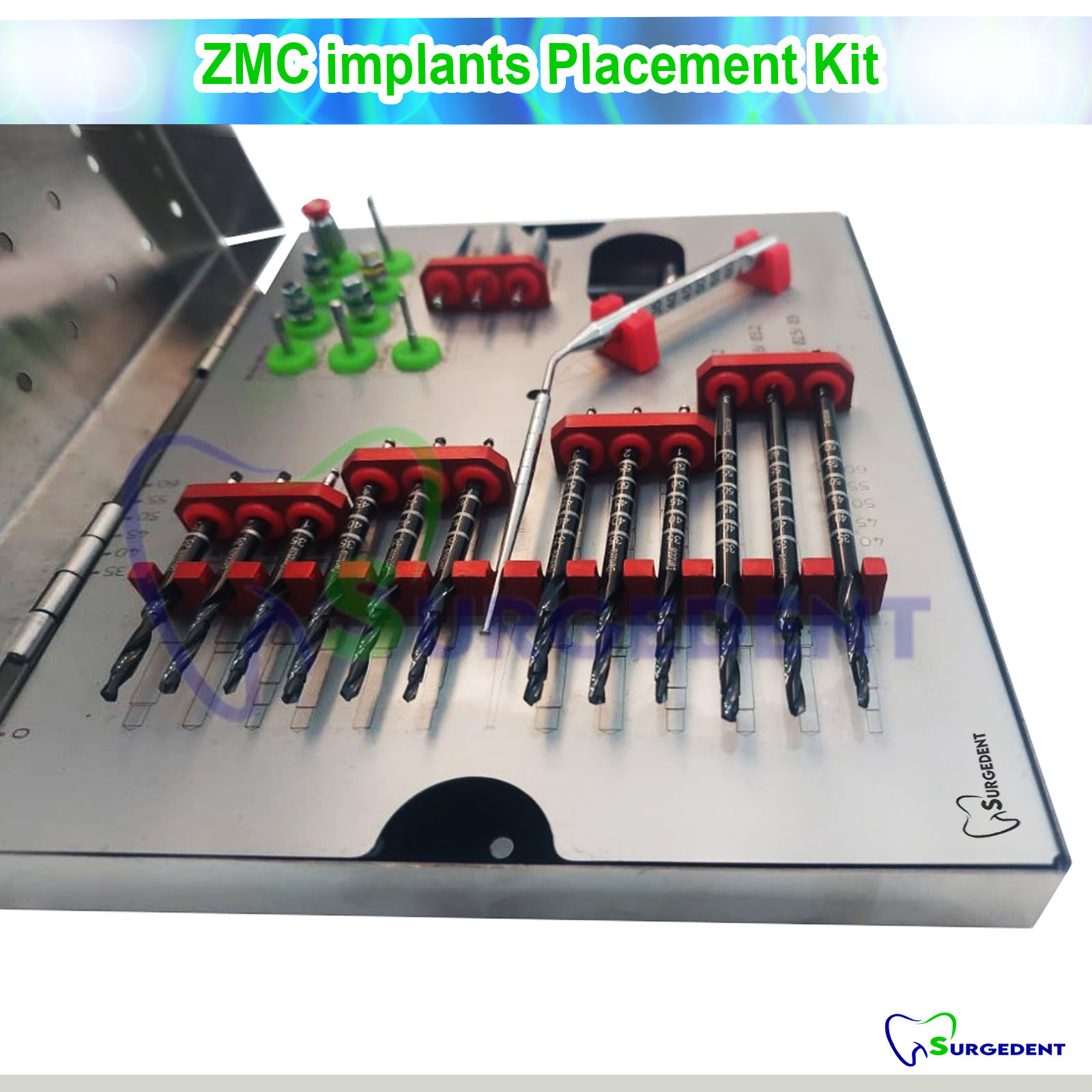
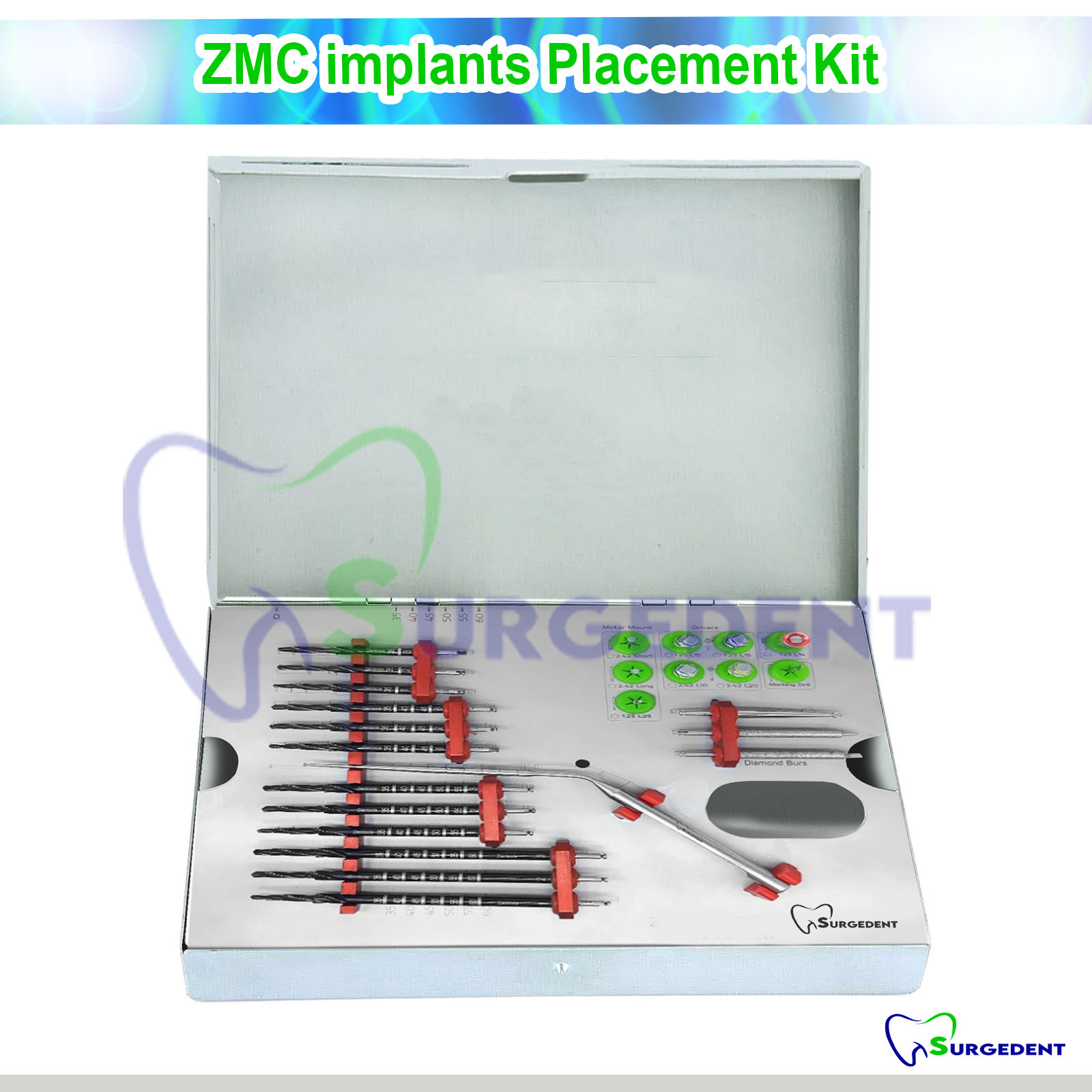
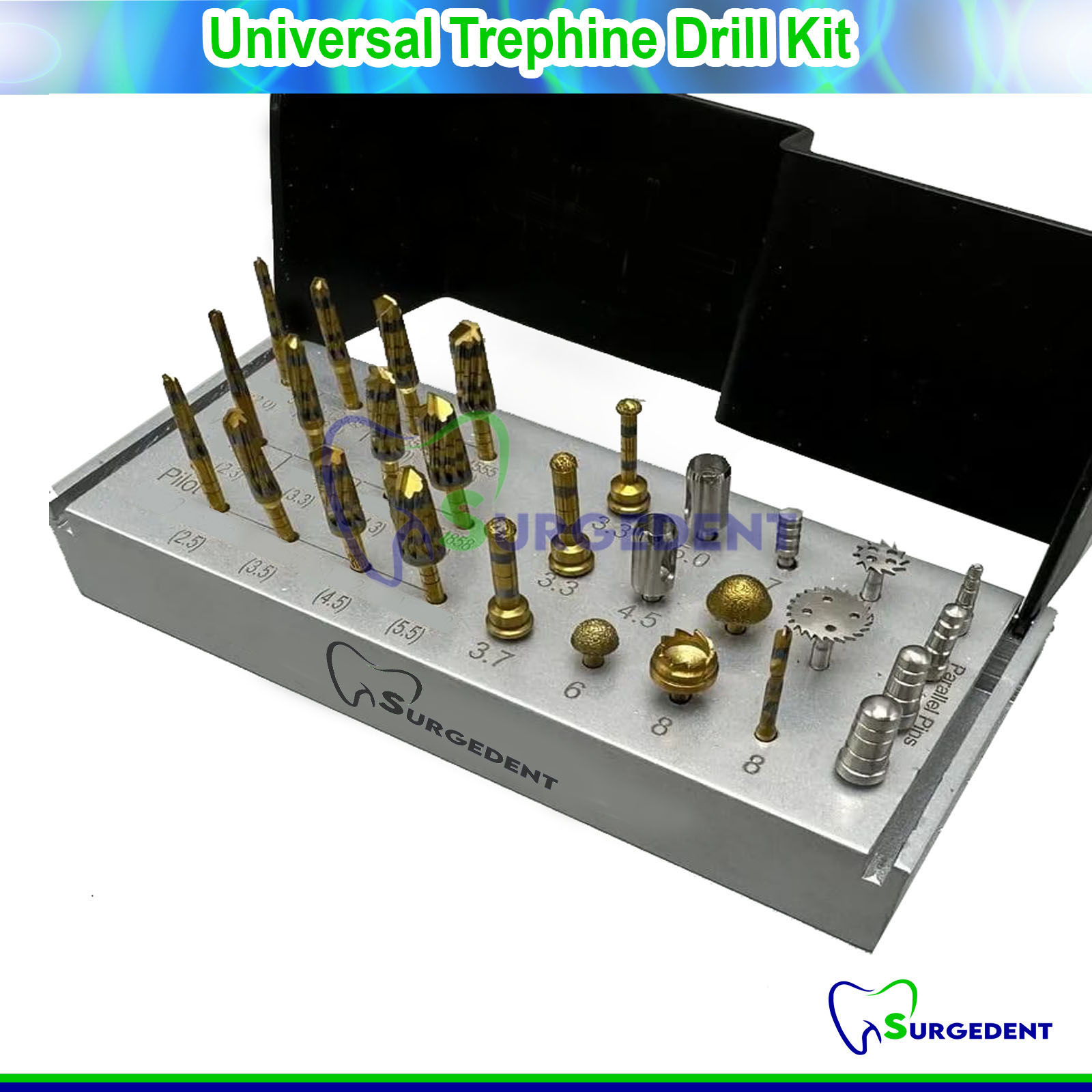
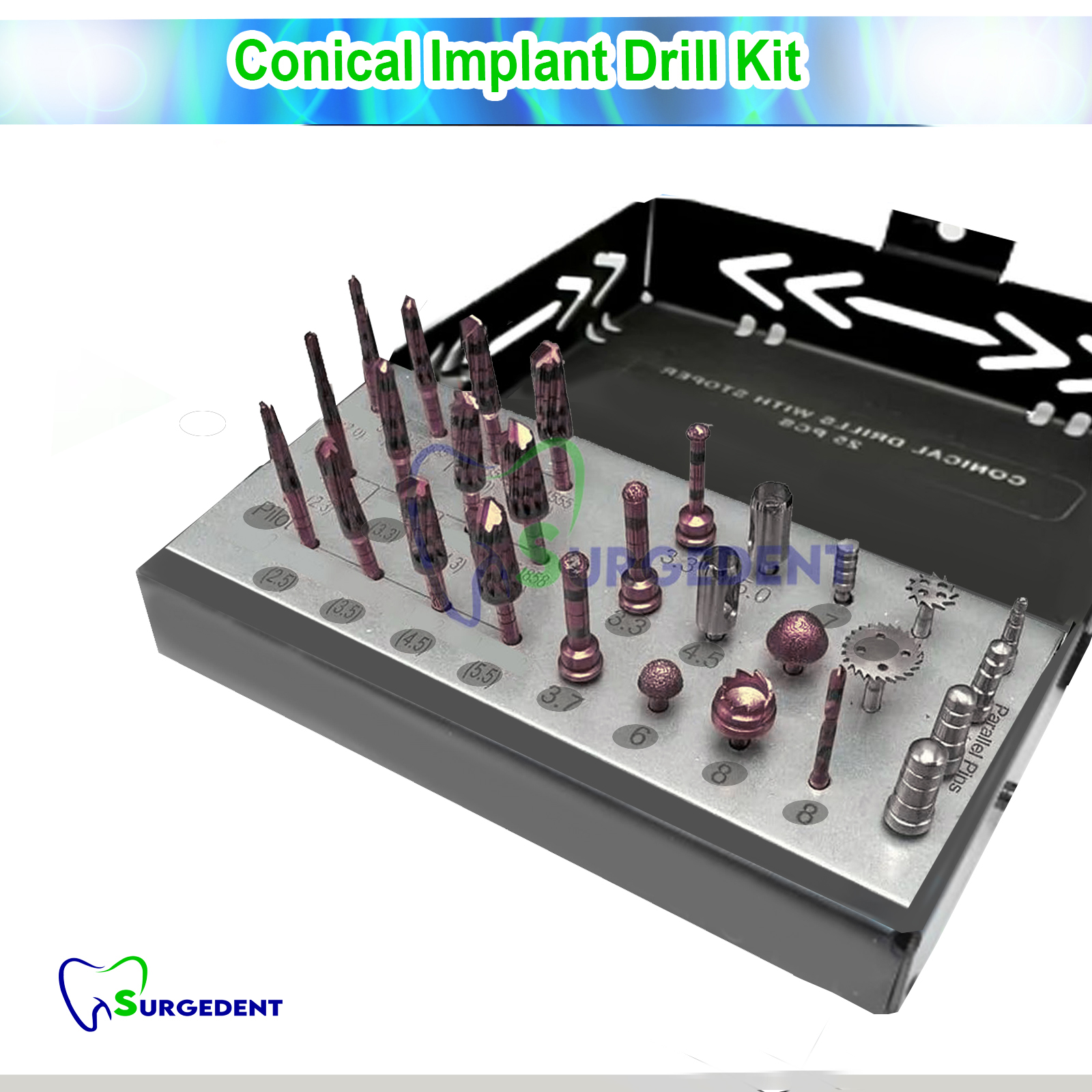
A typical bone expander kit includes:
Bone Expanders: Tools with gradually increasing diameters to widen the bone.
Screw-Type Expanders: Helical expanders used for progressive widening.
Manual Drivers or Handpieces: Used to apply torque manually.
Adapters for Motors: Some kits can be attached to surgical motors for easier use.
Bone Taps and Drill Bits: For pre-tapping before using expanders.
Storage Case: For organization and sterilization.
How It Works
Initial Drilling: A pilot hole is drilled at the implant site to guide the expanders.
Gradual Expansion: The bone expander is inserted into the pilot hole and rotated to gradually expand the bone width.
Compression Effect: As the expanders widen the bone, they compact and densify the surrounding bone, creating a stable base for implants.
Implant Placement: Once the bone has been adequately expanded and densified, the dental implant is inserted.
Ideal Candidates for Bone Expander Kits
Patients with narrow ridges (< 4mm wide).
Cases where bone grafting is not preferred.
Areas with soft or spongy bone that need densification (e. G., posterior maxilla).
Sinus lift preparations requiring localized bone expansion.
Features
Made from medical-grade stainless steel or titanium for durability and sterility.
Includes a series of tapered or stepped expanders in various diameters for gradual bone widening.
Some kits come with manual or motorized torque systems for precise control during expansion.
Helps improve primary stability of dental implants by densifying the surrounding bone.
Kits often include expanders, bone taps, drivers, and connectors, catering to diverse clinical scenarios.
Reduces the need for additional grafting procedures, making it a more affordable solution for implant preparation.
- Non-Traumatic Bone Expansion
- Designed to widen narrow alveolar ridges without causing microfractures.
- Gradual bone compression ensures preservation of surrounding tissues.
- Minimally Invasive
- Reduces the need for invasive procedures like bone grafting.
- Typically involves fewer post-surgical complications.
- High-Quality Material
- Often corrosion-resistant and autoclavable.
- Incremental Expanders
- Ensures precise preparation of implant sites.
- Versatility
- Compatible with both maxillary and mandibular bones.
- Suitable for a variety of bone densities.
- Torque-Controlled System
- Drill-Free Options
- Designed to minimize heat generation and avoid overheating the bone.
- Ideal for cases with low bone density.
- Enhanced Stability
- Color-Coded Tools
- Easy identification of sizes and sequence for streamlined surgical workflow.
- User-Friendly Design
- Ergonomic handles and clear instructions for efficient handling.
- Compact packaging for organized storage and transport.
- Accessory Components
- Cost-Effective Alternative
Product Details
- Unit Size Piece
- Ready to Ship Yes
- Stock Status In Stock
- Sample Available Yes

- Surgedent
- surgedent
- SIALKOT
- Near Dubai Islamic bank Shahab Pura, Sialkot, Sialkot, Punjab
- 03092191244
Submit Your Review
Please login to submit your review.